Online Friendships Are Real: What the Research Says About Virtual Connection for Neurodivergent Kids
Your neurodivergent child's online friends might be the realest friendships they've ever had. Here's why and what the research says.
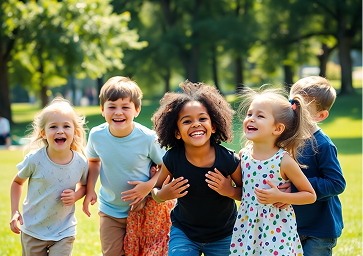
A concerned, exhausted mom had been watching her daughter come alive in Young Scholars Academy’s virtual classrooms. The child who had once struggled in traditional school now wanted to log in. She was engaged. She was laughing. She was herself. Then came a moment the mom didn’t expect: her daughter mentioned her “friends from YSA.” Are these real friendships? Or are online friendships somehow… not the same? The mom brought it up during a YSA parent social club. And what she heard back from other parents changed everything.
“My daughter has found her people here,” one parent said simply.
“Mine is literally guffawing at jokes that only these children would understand,” added another.
“Finding your people—for the kids and for us—is special,” a third reflected.
That’s when it clicked for her: These are real friendships.
Not “practice friendships.” Not “digital placeholders” for the real thing. Real friendships. The kind where someone understands your kid’s weird sense of humor. The kind where they show up, day after day, in a virtual village. The kind where your child finally stops performing and just… belongs. If you’ve found yourself wondering whether your child’s online friendships “really count,” I want to offer something more than reassurance. What I’m about to share is grounded in research — and in what I’ve witnessed firsthand as a full-time online teacher since COVID, and as an online doctoral student studying exactly these questions. The virtual playing field isn’t lesser. For many neurodivergent people, it’s where they finally thrive.
The Hierarchy of Friendship
Here’s what we’ve been told: in-person friendships are “real,” while online friendships are often treated as secondary, something for kids who struggle in traditional settings.
It’s a hierarchy built on neurotypical assumptions. And it doesn’t match neurodivergent kids.
In traditional school and in-person social settings, the playing field is tilted. A neurodivergent child walks into a classroom where:
- The sensory environment is overwhelming: fluorescent lights, background noise, hallway chaos, cafeteria pandemonium
- Physical hierarchy matters: who’s tall, who’s athletic, who fits the unspoken social code of the moment
- Interaction is instant and live, with no time to process, no chance to form thoughts into words - Social connections are shaped by geography, such as who is in your grade, rather than by genuine connection.
- A lot of it feels like a performance, because staying regulated takes 80% of your energy
Now imagine the same kid in a virtual environment:
- They can control their sensory input: dimmed screen, headphones off if needed, camera off if they’re overwhelmed
- Physical appearance concerns are less prominent. Your avatar is whoever you choose it to be
- Text-based options mean they can think before they respond
- They can step away, take a break, regulate their nervous system and return with some water
- The friendships form around who you actually are rather than how you navigate a neurotypical social hierarchy
For many neurodivergent children, online isn’t the consolation prize. It’s the first place where the game was designed to let them participate.
What Research Actually Says About Online Friendships
Let’s look at what the science tells us.
Studies in communication and child development consistently find that friendship quality depends far more on factors like trust, shared interests, consistency, and emotional responsiveness than on whether people meet online or in person.
In Educating 21st Century Children: Emotional Well-being in the Digital Age, particularly Chapter 5 “Online and Offline Relationships” by Gustavo S. Mesch, the research shows that children’s social worlds are no longer limited by geography. Digital communication often expands rather than replaces face-to-face relationships. Online connections can broaden friendship networks, especially for young people who might struggle to access peer groups in traditional settings, and these relationships frequently supplement in-person friendships rather than replace them.
Similarly, in the study The Quality of Online, Offline, and Mixed-Mode Friendships Among Users of a Social Networking Site by Antheunis, Valkenburg, and Peter, researchers found that friendship quality depends far more on factors like perceived similarity, emotional closeness, and ongoing interaction than on where the friendship begins. The study also shows that as relationships develop and communication deepens, differences between online and offline friendships tend to decrease over time, particularly when friendships extend across multiple forms of interaction.
The research is especially clear when we look at neurodivergent populations. For example, the assumption that friendship is primarily determined by physical proximity does not fully align with how autistic individuals describe their lived experience of relationships. In a scoping review published in the Review Journal of Autism and Developmental Disorders (“Experiences of Friendships for Individuals on the Autism Spectrum,” Black et al., 2022), researchers found that autistic individuals often define friendship through both homophily (similarity and shared interests) and propinquity (physical closeness), similar to non-autistic individuals. However, the study also highlights that shared interests, emotional safety, and mutual understanding are central to how friendships are experienced and sustained across participants. These factors are often especially important in autistic individuals’ accounts of friendship. The study also notes that many autistic individuals report additional challenges such as friendship insecurity, social anxiety, and pressure to conform to neurotypical social norms.
When your neurodivergent child finds another kid who shares their passion for a specific anime, or who gets their jokes about obscure historical facts, or who understands why typical small talk is suffocating, that friendship isn’t less real. It’s built on genuine alignment rather than an accident of geography.
For a child who masks all day, the ability to control self-presentation isn’t a workaround, it’s relief. Research in computer-mediated communication highlights that digital environments introduce different “affordances” for how people present themselves and interact. In Avatars and Computer-Mediated Communication: A Review of the Definitions, Uses, and Effects of Digital Representations (Nowak & Fox, 2018), the authors describe avatars (often little cartoon or graphic figures) as tools that shape self-presentation and social perception in online environments. They note that avatars and other digital representations allow individuals to express identity, influence how they are perceived by others, and engage in communication in ways that differ from face-to-face interaction. These environments provide greater flexibility in how identity is presented and how social cues are conveyed, which can change the dynamics of communication itself.
The ability to edit text before sending, to use avatars, to control when you’re “present”—these aren’t cheats or workarounds. They’re features that change how connection and self-presentation function.
And here’s what really stands out: in virtual communities, asynchronous communication becomes possible. Your child can think about what someone said, formulate a response, and return to the conversation. That’s not less authentic. That’s often when authenticity happens—when someone has time to be genuinely themselves rather than performing in real time. Personally, I was hospitalized multiple times for extended periods as a child, long before great online classes existed. I didn’t have access to many peers during those stretches. I know what that isolation feels like, and I know what I would have given for the kind of friendships I’ve watched form between kids in my online classes. For some children, virtual connection isn’t a preference. It’s the only door that’s open. And what comes through that door is real. ## Why Online Environments Can Support Neurodivergent Connection
Let me walk you through what can change when a neurodivergent child steps into a virtual space.
Sensory Load Drops Dramatically
A neurodivergent kid in a typical school is managing: visual input, auditory input, social rules, academic demands, social demands, and the constant background anxiety of “am I doing this right?” At the end of the day, they’re wiped out.
In a virtual classroom, you remove several of those simultaneous demands. The sensory environment is theirs to control. If the camera’s off, nobody knows they’re in their pajamas, sitting in their dark room with weighted blankets. If the sound is overwhelming, they can mute. If they need to step away, they can. This isn’t avoidance. This is regulation.
Text-Based Communication Is a Superpower for Some
Neurodivergent kids who struggle with real-time verbal processing often shine in written communication. They have time to think. They can edit. They can express themselves without the pressure of eye contact or facial expression. In a text-based chat or through written messages, some neurodivergent kids find their voice for the first time.
Avatars Reduce Social Anxiety
When your child’s identity is mediated through an avatar (such as a cartoon character they designed) something magical happens. The performance pressure changes. They’re not being judged on appearance, gait, tone of voice, or any of the subtle social cues that neurodivergent kids are constantly told they’re “getting wrong.” They’re just… a presence in the space.
Interest-Based Community Is How Neurodivergent Kids Naturally Connect Here’s one difference often seen in how neurodivergent kids form connections: they may be more likely to bond through shared interests than through physical proximity. This can be a real strength, though it is not always easy to support in traditional school settings, where friendships are often shaped by seating charts, grade level, and daily contact. Online, that changes. For example, I’ve had multiple students over the years with an extraordinary depth of knowledge about birds. Not casual interest, but the kind of encyclopedic, passionate fluency that has zero outlet on a typical day. In a traditional classroom, that knowledge is invisible at best and isolating at worst. Online, that same child finds the one or two other kids who can actually meet them there. For some children, that’s the first time it’s ever happened. Time to Process and Respond
In a neurotypical social interaction, the pace is set by the neurotypical person. Real-time conversation, quick social cues, unspoken expectations. Neurodivergent kids are constantly playing catch-up.
Online, if a child needs five minutes to process something and craft a response, that’s fine. Nobody’s waiting, tapping their foot. The conversation is still there when they’re ready. It’s a small thing that transforms everything about how a neurodivergent child can show up in social interaction.
What Parents Are Seeing
Let’s return to what’s happening in the YSA community, because the most meaningful data often comes from lived experience. One parent described a shift in their daughter’s self-perception. Before YSA: “I’m weird, I can’t make friends, something is wrong with me.” After finding her peer group in the virtual community: “I’m just different, and here, different is normal.” Another parent shared: “These are the first friends who have ever made her genuinely laugh—not the performed laugh, not the trying-to-fit-in laugh. The real laugh. That’s when I knew.” Parents are watching their children transform. They’re watching the anxiety drop, the engagement rise, and the genuine belonging settle in like something they’ve been missing.
These aren’t kids who are avoiding “real” friendship. These are kids who were failing in environments not designed for them, and thriving when the environment shifted.
What Good Virtual Community Actually Looks Like
Not all online spaces are equal.
A Discord server where kids lurk anonymously? That’s not community. A marketplace where families shop for classes, try one, and leave? That’s a transaction, not a village. A Zoom classroom where students are muted and all cameras are off? That’s school, not community.
Real virtual community for neurodivergent kids looks like something different.
Young Scholars Academy’s virtual campus is open from 7AM to 7PM Pacific, five days a week. That’s not a classroom. That’s a village. Kids can log in and find others already there. They eat lunch together as avatars. They hang out in common spaces. They run into each other. It’s the kind of serendipity that builds real friendship.
Cohort continuity matters enormously. When your child’s cohort stays together across semesters, when they see the same faces year after year, friendships have time to deepen. It’s not a one-off connection. It’s a village where you’re building something over time.
Mentorship structures matter too. When older students stick around and mentor younger ones, when younger kids see pathways to deeper connection and leadership, it builds a healthy social ecosystem. Not a hierarchy, but a community with depth.
The Friendship Social Club (a dedicated space for kids to just hang out and be friends without the academic layer) is where we see some of the strongest bonds form. It’s unstructured. It’s just kids being kids together.
And here’s what we notice: when families stack three or more courses, when they’re committed enough to make YSA a regular part of their week, that’s when lifelong friendships form. The magic happens in consistency and in choosing to show up.
Kids who, when asked “are you coming back next semester?” say things like “Of course. My friends are here.”
That’s not a program. That’s a community.
Stop Measuring Your Child’s Friendships by the Wrong Standard
The friends who understand your kid’s obscure references. The ones who laugh at the weird jokes that don’t land with anyone else. The ones who show up in the virtual village day after day. The ones who get why your child’s brain works the way it does, because their brains work similarly. The ones who don’t require your child to perform.
Those are real friends.
Not “good for now” friends. Not “better than nothing” friends. Not practice friends.
Real friends.
Research increasingly backs this up. The lived experience of families confirms it. And your own eyes will tell you it’s true when you watch your neurodivergent child light up logging into their virtual community.
We’ve spent so long measuring friendship by neurotypical metrics—in-person, spontaneous, physically proximate—that we’ve missed something important. For some neurodivergent kids, those metrics are obstacles to friendship, not the markers of authenticity.
Online spaces can create friendships that are actually designed to work alongside academics.
And that changes everything. Come See the Village — Live Everything this post describes — the virtual campus, the cohort that stays together, the kids who finally stop performing and just belong — is open for you to experience on July 15th. Your child joins a live student breakout. You watch real friendships in real time. No slides, no sales pitch. Just the village, live on Zoom.
About Young Scholars Academy
Young Scholars Academy is a WASC-accredited virtual learning community offering 200+ live online courses and camps for gifted or 2e children ages 5–18, in classes of 6–8 students, led by neurodivergent mentors. Young Scholars Academy currently serves 1,200+ families across 47+ states and 17 countries, with a 93% semester-over-semester re-enrollment rate. ESA funding is accepted in 10+ states.
Explore Fall CoursesYou don't have to figure this out alone.
Right now, a kid who thinks like your kid is in a class they chose, with a mentor who was once just like them, surrounded by friends who don't think they're weird... they think they're interesting.
200+ courses for kids who think differently.
Live online. Classes of 6–8. Mentors who were these kids. WASC accredited.
Explore Fall CoursesTrusted by families like yours
1,200+ families across 47+ states. 93% re-enroll.
They found their people here. So can your child.
Explore Fall CoursesRecommended for readers of Parent Support
Find a parent support class that fits your child.
Small groups of 6–8, led by mentors who get how your kid thinks.
Explore Fall Courses5 Signs Your Gifted or 2e Child Is Being Under-Served
A free, practical guide — plus early invites to expert talks, AMAs, and new course launches.
No spam. Unsubscribe anytime.
You're in! Check your inbox for the guide. ✨
You're already in the village
Here's what's open right now.
Live online. Classes of 6–8. Mentors who were these kids. WASC accredited.
Explore Fall Courses