Screen Time for Gifted or 2e Kids: How to Become Your Child's Ally Online
Digital wellness educator Julia Storm explains how to move from gatekeeper to ally and set screen time boundaries that actually work.
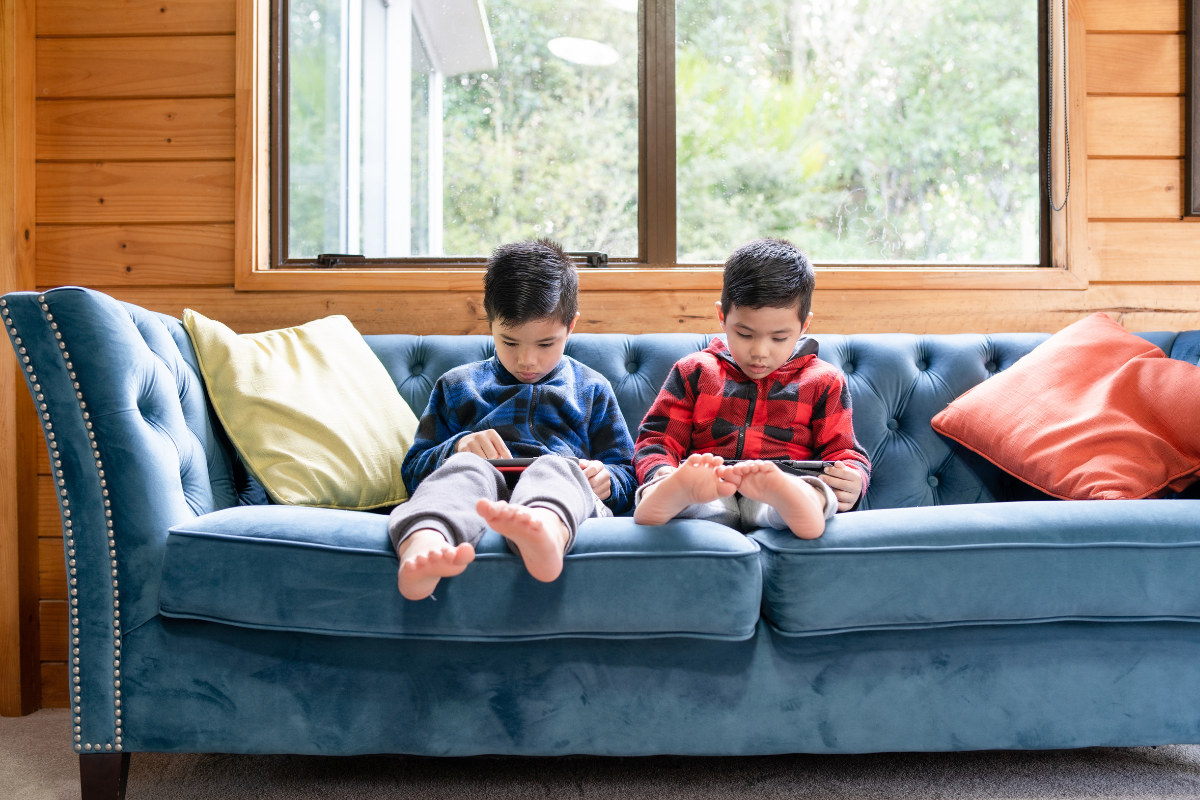
Screen time is one of the most common sources of stress we hear about from families. The arguments over “five more minutes,” the worry about what kids are seeing, the guilt about whether we’re doing it right. For parents of gifted or 2e kids, those questions get even more layered.
That’s why we invited Julia Storm, digital wellness educator and founder of ReConnect, to talk with the YSA community about healthy tech balance. What parents got was not a rulebook. It was a calmer, more connected way to think about kids growing up online.
Start With the Big Picture
Julia opens every talk by zooming out, because the daily fights over minutes and devices make it easy to lose sight of the real goal. She grounds parents in five pillars: raising kids who are mindful consumers of media, who can sense danger and stay safe, who engage online with integrity, who can defend their focus against distraction, and who keep strong ties in the offline world.
She describes media as a river that will carry kids wherever the current goes. “And my goal with kids is to give them that paddle.”
From Gatekeeper to Ally
When kids are small, parents can act as gatekeepers. As children get older, that role starts to falter. Julia’s advice is to avoid the two easy traps: becoming an adversary who is always fighting about devices, or checking out entirely.
“My philosophy personally is that we really want to step into the role of being their ally here,” she said.
That starts with curiosity. Ask what your child loves online, have them show you their favorite game or channel, and co-watch or co-play when you can. When you disagree with something, explain why it conflicts with your values instead of just shutting it off. Those conversations plant seeds for the critical thinking kids will need when you’re not in the room.
Junk Food Media vs. the Main Course
“Screen time” is a blanket term that hides a lot of nuance. Julia separates high-dopamine, instant-gratification content (rewards-driven games, short-form video, anything chasing likes and follows) from everything else. “I call this junk food media.”
She uses the food metaphor with kids directly. Everyone loves candy, but nobody eats it as every meal. “That’s the treat. That’s the dessert. That is not the main course.”
The other side of the menu is big: reading, creating art and music, making videos, researching, building in sandbox games, and gaming in community. These still need limits, because kids also need movement, fresh air, and people. But what a child is doing on a screen matters as much as how long.
Why the Online World Clicks for 2e Kids
Julia honored the traits so many of our learners share: intense curiosity, creativity, deep empathy, hyperfocus, and a healthy streak of nonconformity. She also named why the online world can feel like such a relief to them. It has clear rules and patterns, immediate rewards, and a sense of control that school or peer settings may not offer. For kids who find in-person social norms exhausting, communicating online can feel easier.
And for kids still searching for their people, she offered real hope: “if your child has a hard time finding like-minded peers, they probably exist somewhere online.”
Those benefits don’t make neurodivergent kids exempt from the risks. Julia was candid that novelty-seeking kids can be more vulnerable to problematic gaming, a pattern research on ADHD and gaming disorder supports. With her own son, she explained how his brain works, upsides and all, and they made a deal: when she sees warning signs, she can gently ask, “Is this feeling out of your control a little bit right now?”
The Boundaries That Matter Most
“That’s why I never tell parents exactly how to do screen time,” Julia said. Instead, she offers a short list of limits she’s found matter most:
- Keep screens out of bedrooms for elementary and middle schoolers. If that isn’t possible, try an open door.
- Be clear and consistent. Wishy-washy rules are what fuel the daily battles.
- Protect family meals and bedtime with a screen-free buffer before sleep.
- Work before play, so responsibilities come first and recreation follows.
- Create a charging “parking lot” in a shared space where every device goes overnight. As Julia put it, “devices should not be in kids’ bedrooms overnight really ever.”
Safety Starts With “You Won’t Get in Trouble”
If kids play or chat with people they don’t know, they need to learn the red flags of grooming. Julia stressed how counterintuitive this is for children: an online predator doesn’t seem threatening. “They act like a friend. They act like an admirer.”
Just as important is making sure kids will come to you. Many kids hide online trouble because they fear an “I told you so.” Julia’s script is simple: “I’m not going to get mad at you. I’m going to support you and I’m going to help you.”
Social Media: Wait, and Find Your People
Julia’s ideal is waiting on social media until high school. She acknowledged the real benefits, including self-expression and community, but believes the downsides of constant comparison, algorithm-driven rabbit holes, and lost sleep outweigh them for most kids. If you’re worried your child will be the only one without it, she recommends finding like-minded parents and making agreements together.
That theme of community came up again in Q&A, when Mr. Sam reflected on why YSA exists. With the internet, kids can “find people who are like-minded for the first time in their lives.” The goal isn’t zero screens. It’s screens that lead to real connection.
Questions Parents Ask
My child loves educational videos, but some topics are making him anxious. What should I do? Julia suggests vetting content carefully and leaning on trusted sources like PBS rather than open YouTube. Common Sense Media reviews kids’ content by age and flags what might be scary. Books on the same topic can also be a gentler way to feed a big interest.
How do I keep my child focused during tech-based homework? Do non-tech homework first, keep homework in a shared space, close extra tabs, and turn on do not disturb. Short work sprints followed by a brief break can help. Some families also set up a separate computer account just for school.
Are all video games the same? No. Julia is most cautious about games with slot-machine-style variable rewards and about violent first-person shooters, which she sees as keeping kids in a prolonged fight-or-flight state. Creative, world-building, and lighthearted games are easier to enjoy in moderation. “If you follow your instincts on it with these games, your instincts are usually pretty right on.”
How can I tell if gaming has become an addiction? Julia looks for signs that resemble any other addiction: intense meltdowns when the game is unavailable, pulling away from activities your child used to enjoy, and sneaking or lying about play. For families concerned about this, she recommends Game Quitters as a starting point, along with support from a specialist.
How can parents encourage schools to limit phones? Julia has seen parent petitions work, especially when they share the research with administrators. In California, the Phone-Free School Act required every district to adopt a policy limiting or prohibiting student smartphone use by July 1, 2026.
Is there a tool to help us create family tech rules together? Julia’s favorite is The Smart Talk, a free interactive site from National PTA that walks families through the conversation and produces a technology agreement everyone can sign.
About Young Scholars Academy
Young Scholars Academy is a fully virtual enrichment community for gifted, twice-exceptional, and neurodivergent learners ages 5 to 25. Through strength-based, interest-driven courses, students explore what they love alongside peers who get them, and families find a village that understands their journey.
About the Speaker
Julia Storm is a Los Angeles-based digital media wellness educator, writer, speaker, and the founder of ReConnect, a whole-child, whole-family approach to preparing kids for life in the digital age. She holds a BA from Princeton University and a master’s degree from UCLA, and produced award-winning children’s media for Netflix and PBS before launching ReConnect. She is a Certified Digital Wellness Educator through the Digital Wellness Institute and a teaching partner with Common Sense Media’s Common Sense Schools program. Her work has been featured in Time, the Los Angeles Times, Wired, and KTLA. She is also a mom of two sons.
Written by Karelia Lopez
Karelia Lopez is a published author and communications and marketing strategist with more than a decade of experience working with corporate organizations and startups across Latin America. She is passionate about helping professionals and brands communicate with authenticity, connect with their audiences, and turn their ideas into stories that resonate. Through her work, she explores the power of communication and storytelling to transform brands, teams, and opportunities.
About Young Scholars Academy
Young Scholars Academy is a WASC-accredited virtual learning community offering 200+ live online courses and camps for gifted or 2e children ages 5–18, in classes of 6–8 students, led by neurodivergent mentors. Young Scholars Academy currently serves 1,200+ families across 47+ states and 17 countries, with a 93% semester-over-semester re-enrollment rate. ESA funding is accepted in 10+ states.
Explore Fall CoursesYou don't have to figure this out alone.
Right now, a kid who thinks like your kid is in a class they chose, with a mentor who was once just like them, surrounded by friends who don't think they're weird... they think they're interesting.
200+ courses for kids who think differently.
Live online. Classes of 6–8. Mentors who were these kids. WASC accredited.
Explore Fall CoursesTrusted by families like yours
1,200+ families across 47+ states. 93% re-enroll.
They found their people here. So can your child.
Explore Fall CoursesRecommended for readers of Expert Talks
Find a expert talks class that fits your child.
Small groups of 6–8, led by mentors who get how your kid thinks.
Explore Fall Courses5 Signs Your Gifted or 2e Child Is Being Under-Served
A free, practical guide — plus early invites to expert talks, AMAs, and new course launches.
No spam. Unsubscribe anytime.
You're in! Check your inbox for the guide. ✨
You're already in the village
Here's what's open right now.
Live online. Classes of 6–8. Mentors who were these kids. WASC accredited.
Explore Fall Courses