
A great fit if they…
Always want to know what things are made of and love seeing how one thing turns into another.
Free Spring Open House · Wed, Nov 11 · Meet the mentors who get your kid
Save My SeatScience, Nature & Space · Chemistry
For kids who always ask what things are made of. They build atoms and molecules, poke at oobleck and watch real reactions with Mr. Mark.
From $39.71 /week
Course details
Young Scholars Academy's Chemistry Explorers: Atoms, Molecules & Amazing Reactions is a live online science class for young scientists ages 6 to 9 who always want to know what things are made of. With Mr. Mark, kids build atom models, meet the periodic table, put molecules together on screen and learn to spot the clues that a chemical reaction happened. Mr. Mark keeps the big ideas kid-sized, and no materials are needed.
Each week the class zooms in on atoms, molecules and the reactions that turn one thing into another. Kids use models, on-screen building and live demonstrations to see ideas that are too small to see with their eyes. It's real chemistry, sized for six- to nine-year-olds.
Mr. Mark flexes the content for younger kids. He keeps every topic concrete: an atom becomes a model they build, a formula like H₂O becomes a molecule they put together on screen. Kids learn the real words and what they mean.
Kids find out why oobleck acts like a solid one second and a liquid the next. They learn about acids and bases, mixtures and how to separate them. Live demonstrations show what a reaction looks like as it happens.
The semester ends with a live chemistry demonstration where students spot the evidence that a reaction happened. By then they know what clues to look for and can explain what they see.
Ages 6 to 9 · Prerequisites · Who it's for
Always want to know what things are made of and love seeing how one thing turns into another.
Everyone starts together with Unit 1: Atoms and Elements, building their first atom model.
Chemistry Explorers is a new course, so returning YSA students start Unit 1 alongside everyone else.
Learning outcomes
Build a model of an atom and name its parts.
Find elements on the periodic table by symbol and number.
Build simple molecules like water and carbon dioxide.
Point out the clues that a chemical change happened.
Unit 1
Students build atom models and meet the periodic table.
Unit 2
Students build molecules on screen and see how atoms connect.
Unit 3
Solids, liquids, gases, plasma, and why oobleck is so strange.
Unit 4
Students learn to spot the clues that a reaction happened, ending with a live demonstration day.
Week-by-week plan
Each week zooms in on one idea, with models, on-screen building and live demonstrations.
Meet protons, neutrons and electrons, and build a first atom model.
See how the periodic table is organized and find elements by symbol and number.
Use models to compare what's inside different atoms, and find out why two atoms of the same element can weigh different amounts.
See how an atom's outer electrons decide which atoms like to join up with others.
Find out what H₂O and CO₂ mean and which atoms are in each.
Put atoms together into molecules on screen.
Find out what happens when an atom gains or loses an electron.
Compare the ways atoms hold on to each other in salt, molecules and metals.
See how some atoms pull harder on the electrons they share.
Build models where atoms share one, two or three pairs of electrons.
See how a molecule's shape changes how it acts, and why water is so good at dissolving things.
Use picture models to see that the same atoms are there before and after a reaction.
Sort reactions that build up, break apart, swap partners or burn, and look for clues that a change happened.
Find out how chemists keep track of atoms that are far too small, and far too many, to count one by one.
See how the ingredients a reaction starts with decide how much it can make.
Compare solids, liquids, gases and plasma, and find out why oobleck acts like a solid one second and a liquid the next.
Explore acids and bases, see how indicators show them, and watch what happens when they cancel each other out.
See how filtering, evaporating and chromatography pull mixtures apart.
Find out what makes reactions go faster or slower, and why some give off energy while others take it in.
See how electrons moving from one atom to another explain rust, batteries and fire.
Watch live demonstrations and point out the evidence that a reaction happened.
Growth · Progress reports
Your child explains why oobleck acts like a solid one second and a liquid the next, using words like atom and molecule.
Big, invisible ideas start to make sense to them, and they know how to look for evidence of what's happening.
A short report from Mr. Mark about your child's actual work: what they made, where they shined, what's next.
You'll get this list by email when you enroll, then 1 week, 3 days and 1 day before class starts.
Getting started
Zoom link, Google Classroom link and an add-to-calendar button in one place. Forward it to your child: Young Scholars Academy can't email students directly.
Syllabus, the weekly Zoom link and a way to message Mr. Mark.
A short progress report from Mr. Mark about your child's actual work.
Spring 2027 · Schedule · Tuition
| Section | Ages | Day | Time (PT / ET) | Weeks | First class | Mentor |
|---|---|---|---|---|---|---|
| Chemistry Explorers (45 min) (NEW!) - Mr. Mark - Ages 6-9 - M @ 9 PT | 6-9 | Monday | 9:00-9:45 AM PT / 12:00-12:45 PM ET | 21 | January 4, 2027 | Mr. Mark |
All times Pacific, with Eastern alongside.
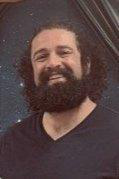
Mentor
Science Educator & Neurodivergent Advocate
Chemistry Explorers: Atoms, Molecules & Amazing Reactions FAQ
Mr. Mark keeps the big ideas kid-sized. Young Scholars Academy's Chemistry Explorers uses models, on-screen building and live demonstrations so kids can see ideas that are too small to see with their eyes.
No. No materials are needed. Mr. Mark runs the demonstrations live on camera.
The class zooms in on one idea, like atoms, molecules, states of matter or reactions, and kids build models, put molecules together on screen or watch a live demonstration.
With a live chemistry demonstration where students spot the evidence that a reaction happened.
If you’re not 100% in love with the course, you have options depending on how you enrolled:
You can switch to another course of equal or lesser value that’s a better fit or get a credit to use toward a future course.
You can either get credit toward a future course, switch to another course of equal or lesser value that’s a better fit, or stop all future payments after a 30-day processing period.
No risk. No stress. Just the learning and belonging you have been looking for.
We can offer this because we know what we do works for thousands of other families. Kids become more self-confident. They find their people. And families tell us this is the place where their student finally feels welcome. We know it will work for your family, too.
All-Access Passes have separate terms and conditions. Please see the All-Access Pass pages.
It goes without saying, but we’ll say it anyway... to qualify for the satisfaction guarantee policy, you have to actually attend the classes. This is not a cancellation policy. It’s a satisfaction guarantee. You can’t be satisfied or dissatisfied if you don’t attend.
Young Scholars Academy is a virtual village that offers one-of-a-kind, engaging enrichment courses and community for 5-18-year-old bright, quirky kids to empower them to develop their strengths, make like-minded friends, cultivate life skills, build confidence, and feel great about themselves under the loving care of expert mentors. description2: >- Picture a place where your child fits in, is celebrated, mentored, and loves learning the unique content their beautiful brain craves. That happens every day at YSA for over 1,200+ families, and it can happen for your family, too.
WASC Accredited · 1,200+ Families · 93% Re-Enroll · 47+ States, 17 Countries, 6 Continents
Learn more about YSA Right now, a kid who thinks like your kid is in a course they chose, with a mentor who was once just like them, surrounded by friends who don't think they're weird... they think they're interesting.
Your child is one click from finding out what that feels like.
Free Spring Open House · Wed, Nov 11 · 5 PM PT