
A great fit if they…
Look up at the night sky and have a hundred questions about the Moon, planets and stars.
Free Spring Open House · Wed, Nov 11 · Meet the mentors who get your kid
Save My SeatScience, Nature & Space · Astronomy
For the kid with a hundred questions about the night sky. Each week the class travels a little further out, with real meteorites on camera.
From $39.71 /week
Course details
Young Scholars Academy's Space Explorers: Astronomy From the Moon to Distant Galaxies is a live online class for gifted or 2e kids ages 6 to 9 who look up at the night sky and have a hundred questions. Each week Mr. Mark takes the class a little further out, from our Moon and Sun to the planets, stars, black holes and galaxies. Students compare sizes, model orbits and see real lunar and Martian meteorites from his collection on camera.
The class starts close to home with our Moon and Sun. From there it moves out to the planets, then the stars, black holes and galaxies. Each week builds on the last, so the universe gets bigger one step at a time.
Mr. Mark brings space up close. Students see real lunar and Martian meteorites from his collection on camera. They compare the sizes of planets and stars and model how orbits work.
Students explore the volcanoes on Jupiter's moon Io, Saturn's rings, and why eclipses happen. They find out how stars are born and how they change over their lives. Mr. Mark keeps it concrete and sized for young kids.
Ages 6 to 9 · Prerequisites · Who it's for
Look up at the night sky and have a hundred questions about the Moon, planets and stars.
Everyone starts together with Unit 1: Our Solar System.
Learning outcomes
Put the planets in order and describe what makes each one different.
Explain why the Moon has phases and how an eclipse happens.
Describe how a star is born and what it can become.
Tell an asteroid, a comet and a meteorite apart.
Unit 1
How big space is, how orbits work and how our Sun shapes life on Earth.
Unit 2
A planet-by-planet tour, with real meteorites on camera.
Unit 3
How stars live, explode and leave remnants behind.
Unit 4
The big picture, and the search for life.
Week-by-week plan
Each week the class travels a little further out, from our Moon and Sun to the planets, stars and galaxies.
Compare the sizes of planets, stars, solar systems and galaxies with hands-on activities.
Find out how far is far, from the distance to the Sun to light years, and how scientists measure places no one can travel to.
Model orbits and see how gravity keeps planets and moons moving.
See how clouds of gas and dust turn into stars and planets.
Explore sunspots, solar flares and solar storms, and how they make auroras.
Compare Mercury, Venus, Earth and Mars, from Venus's volcanoes to Martian dust devils.
Explore the Moon's craters and phases, and see real lunar and Martian meteorites on camera.
Visit the Great Red Spot, then compare Io's volcanoes with Europa's icy surface.
Explore Saturn's rings, then Titan and the icy plumes of Enceladus.
Meet the ice giants, the dwarf planets and the faraway Kuiper Belt.
Learn to tell an asteroid, a comet and a meteorite apart, with real meteorites on camera.
Find out how eclipses, auroras and the green flash happen.
Follow a star from birth to old age, and see why big stars and small stars end differently.
Meet white dwarfs, neutron stars and supernovae.
Find out what a black hole is and how scientists know one is there.
Compare spiral, elliptical and irregular galaxies, and find our place in the Milky Way.
Find out why scientists think there's more out there than we can see, and what's still a mystery.
Explore the Big Bang and how the universe keeps getting bigger.
See how scientists find planets around other stars and what a planet needs for life.
Explore spacecraft, how astronauts stay alive in space, satellites and robot explorers.
Talk about big "what ifs" and learn how scientists tell evidence from ideas.
Growth · Progress reports
A short report from Mr. Mark about your child's actual work: what they made, where they shined, what's next.
You'll get this list by email when you enroll, then 1 week, 3 days and 1 day before class starts.
Getting started
Zoom link, Google Classroom link and an add-to-calendar button in one place. Forward it to your child: Young Scholars Academy can't email students directly.
Syllabus, the weekly Zoom link and a way to message Mr. Mark.
A short progress report from Mr. Mark about your child's actual work.
Spring 2027 · Schedule · Tuition
| Section | Ages | Day | Time (PT / ET) | Weeks | First class | Mentor |
|---|---|---|---|---|---|---|
| Ages 6-9, Wednesday (new course) | 6-9 | Wednesday | 9:00-9:45 AM PT / 12:00-12:45 PM ET | 21 | January 6, 2027 | Mr. Mark |
All times Pacific, with Eastern alongside.
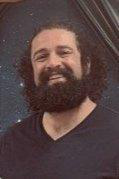
Mentor
Science Educator & Neurodivergent Advocate
Space Explorers: Astronomy From the Moon to Distant Galaxies FAQ
Yes. Mr. Mark shows real lunar and Martian meteorites from his collection on camera.
Space Explorers: Astronomy is built for ages 6 to 9. Mr. Mark keeps the content concrete and kid-sized, with comparisons, models and real specimens.
No materials are needed.
Each class is 45 minutes, sized for younger kids.
Put the planets in order and describe each one, explain Moon phases and eclipses, describe how a star is born and what it can become, and tell an asteroid, a comet and a meteorite apart.

If you’re not 100% in love with the course, you have options depending on how you enrolled:
You can switch to another course of equal or lesser value that’s a better fit or get a credit to use toward a future course.
You can either get credit toward a future course, switch to another course of equal or lesser value that’s a better fit, or stop all future payments after a 30-day processing period.
No risk. No stress. Just the learning and belonging you have been looking for.
We can offer this because we know what we do works for thousands of other families. Kids become more self-confident. They find their people. And families tell us this is the place where their student finally feels welcome. We know it will work for your family, too.
All-Access Passes have separate terms and conditions. Please see the All-Access Pass pages.
It goes without saying, but we’ll say it anyway... to qualify for the satisfaction guarantee policy, you have to actually attend the classes. This is not a cancellation policy. It’s a satisfaction guarantee. You can’t be satisfied or dissatisfied if you don’t attend.
Young Scholars Academy is a virtual village that offers one-of-a-kind, engaging enrichment courses and community for 5-18-year-old bright, quirky kids to empower them to develop their strengths, make like-minded friends, cultivate life skills, build confidence, and feel great about themselves under the loving care of expert mentors. description2: >- Picture a place where your child fits in, is celebrated, mentored, and loves learning the unique content their beautiful brain craves. That happens every day at YSA for over 1,200+ families, and it can happen for your family, too.
WASC Accredited · 1,200+ Families · 93% Re-Enroll · 47+ States, 17 Countries, 6 Continents
Learn more about YSA Right now, a kid who thinks like your kid is in a course they chose, with a mentor who was once just like them, surrounded by friends who don't think they're weird... they think they're interesting.
Your child is one click from finding out what that feels like.

Free Spring Open House · Wed, Nov 11 · 5 PM PT