Back-to-School Executive Function Tips That Actually Work (From Someone Who's Coached Thousands of Kids)
Executive function coach Seth Perler shares real, practical back-to-school executive function tips for parents of bright, quirky kids. No lectures, just what works.

It’s mid-August, and if your kid is bright, quirky, or wired a little differently, you already know what’s coming: the homework meltdowns, the “I forgot” mornings, the mysterious inability to find a shoe. Every year.
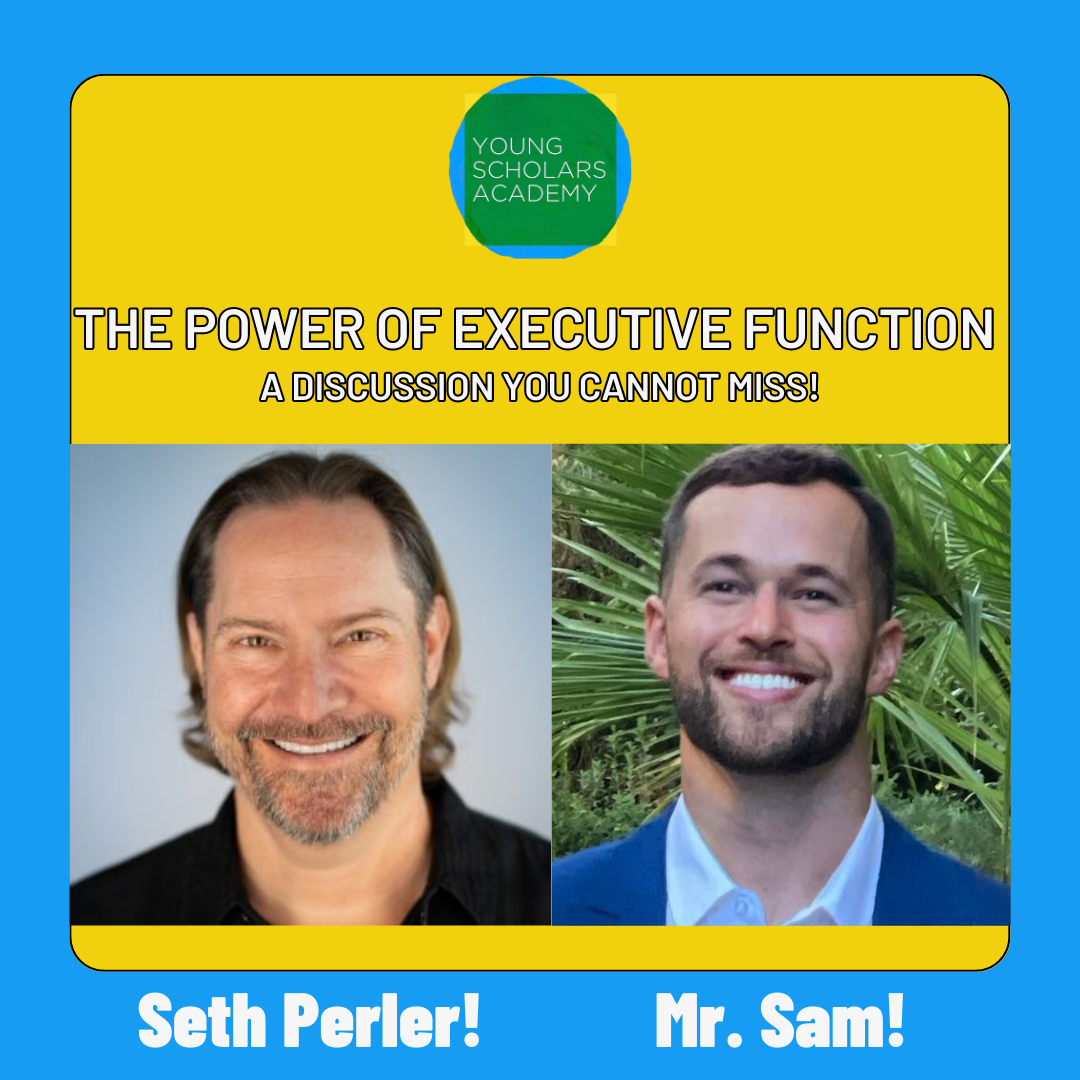
So when executive function coach Seth Perler joined a recent back-to-school talk hosted by Mr. Sam, he didn’t open with a checklist. He opened with something more useful: a reminder that helping a bright, complicated kid “is not rocket science… it is predictable.” The tips below come straight from that conversation, and they’re less about managing your kid’s behavior and more about what actually moves the needle before the school year gets hard.
Look Past the Behavior You’re Seeing
Grades slipping. Meltdowns over homework. A kid who’s brilliant in conversation but can’t seem to start an assignment. These are usually what pull parents into looking for help, and Perler has a name for it.
“Parents seek help when the tip of the iceberg is a mess,” he said. But the visible stuff, the grades and the blowups, is only the part you can see. “What is the tip of the iceberg? The tip of the iceberg is what you see with your eyes… school struggles, or social problems… that is the symptom.” Underneath it is the actual cause: how a kid’s nervous system, executive function, and emotional regulation are working (or not) that day.
The takeaway for back to school: before you build a new chore chart or morning routine, it helps to ask what’s really going on underneath, not just what’s blowing up on the surface. As Perler put it, “when we address the symptom, or only the symptom, we’re missing out on the cause.”
Your Kid’s Buttons Are Actually Yours
One of the more surprising parts of the talk had nothing to do with the kid at all. Perler told a story about a six-year-old student named Whitney who, years ago, pushed every button he had. Eventually he realized something: “Whitney reflected back to me myself. Her patterns and her ways of pushing my buttons were the ways that I pushed my parents’ buttons.”
His conclusion is one worth sitting with as the school year ramps up: “It’s not about getting the kid to stop pushing our buttons, it’s about us getting rid of our own buttons, or shrinking our own buttons.” That’s not a guilt trip. It’s actually good news, because your own reactions are the one part of this equation you have direct control over.
Model the Calm You Want to See
When a kid is genuinely dysregulated, mid-meltdown over a math worksheet or a forgotten permission slip, Perler’s advice isn’t to tell them to calm down. It’s to show them.
He described it this way: instead of instructing a kid to breathe, take a visible breath yourself first. “I’m gonna take a breath for myself so I feel more calm, and I can be helpful to you.” Kids co-regulate off the adults around them, so a parent’s steadiness (or lack of it) is contagious before a single word gets said.
And underneath all of it, Perler kept coming back to something bigger than any single technique: “The most important thing… is our relationship with our kids. You have that today… Today is the only get day you got. That’s it.” Grades and to-do lists matter, but not more than that.
Build the Same Routine, Every Single Day, for Two Months
If your family struggles with mornings, homework time, or getting out the door, Perler’s advice cuts against the instinct to tweak the system every time it fails.
“Pick your battles and stick to it for two months. The exact same thing,” he said. Kids will resist. Mornings will still blow up sometimes. None of that means the routine isn’t working. “Do not change anything,” he added. “The messy is important. The brain is trying to figure out what to do, and you being inconsistent is going to derail things.”
For parents of kids with ADHD, autism, or other executive function differences, and often for parents with those same wiring differences themselves, this kind of repetition is genuinely hard to sustain. Perler’s point is that the difficulty is normal, not a sign to abandon the plan.
The Real Back-to-School Strategy
None of this is a quick fix, and Perler said as much: helping a complicated kid “is not simple… it takes the deep inner work, the hard work.” But it is predictable, and that predictability is something parents can actually work with heading into the school year.
Start small. Notice the pattern underneath the behavior. Work on your own regulation before demanding your kid’s. Pick one routine and hold it steady, messiness and all. And somewhere in there, make room for the relationship itself, because that’s the part that carries a family through the hard weeks ahead.
Seth Perler is an executive function coach and founder of TFOS (The Executive Function Online Summit), now in its 8th year. He spoke with YSA families on August 10 as part of YSA’s back-to-school series.
About Young Scholars Academy
Young Scholars Academy is an online school for gifted or 2e (twice-exceptional) learners. We serve 1,200+ families across 47+ states, 17 countries, and 6 continents with 200+ courses and camps taught by 22 hand-selected mentors. Our small classes (max 6–8 students, average 5) and strength-based approach ensure that bright, quirky kids feel seen, nurtured, and challenged. Learn more at youngscholarsacademy.org.
About Young Scholars Academy
Young Scholars Academy is a WASC-accredited virtual learning community offering 200+ live online courses and camps for gifted or 2e children ages 5–18, in classes of 6–8 students, led by neurodivergent mentors. Young Scholars Academy currently serves 1,200+ families across 47+ states and 17 countries, with a 93% semester-over-semester re-enrollment rate. ESA funding is accepted in 10+ states.
Explore Fall CoursesYou don't have to figure this out alone.
Right now, a kid who thinks like your kid is in a class they chose, with a mentor who was once just like them, surrounded by friends who don't think they're weird... they think they're interesting.
200+ courses for kids who think differently.
Live online. Classes of 6–8. Mentors who were these kids. WASC accredited.
Explore Fall CoursesTrusted by families like yours
1,200+ families across 47+ states. 93% re-enroll.
They found their people here. So can your child.
Explore Fall CoursesRecommended for readers of Executive Function
Find a executive function class that fits your child.
Small groups of 6–8, led by mentors who get how your kid thinks.
Explore Fall Courses5 Signs Your Gifted or 2e Child Is Being Under-Served
A free, practical guide — plus early invites to expert talks, AMAs, and new course launches.
No spam. Unsubscribe anytime.
You're in! Check your inbox for the guide. ✨
You're already in the village
Here's what's open right now.
Live online. Classes of 6–8. Mentors who were these kids. WASC accredited.
Explore Fall Courses