PDA in Gifted Kids: What It Is and How to Support Your Child
PDA (Pathological Demand Avoidance) in gifted and 2e kids is widely misunderstood. Learn what it really means, why "can't not won't" changes everything, and practical strategies. From Young Scholars Academy.

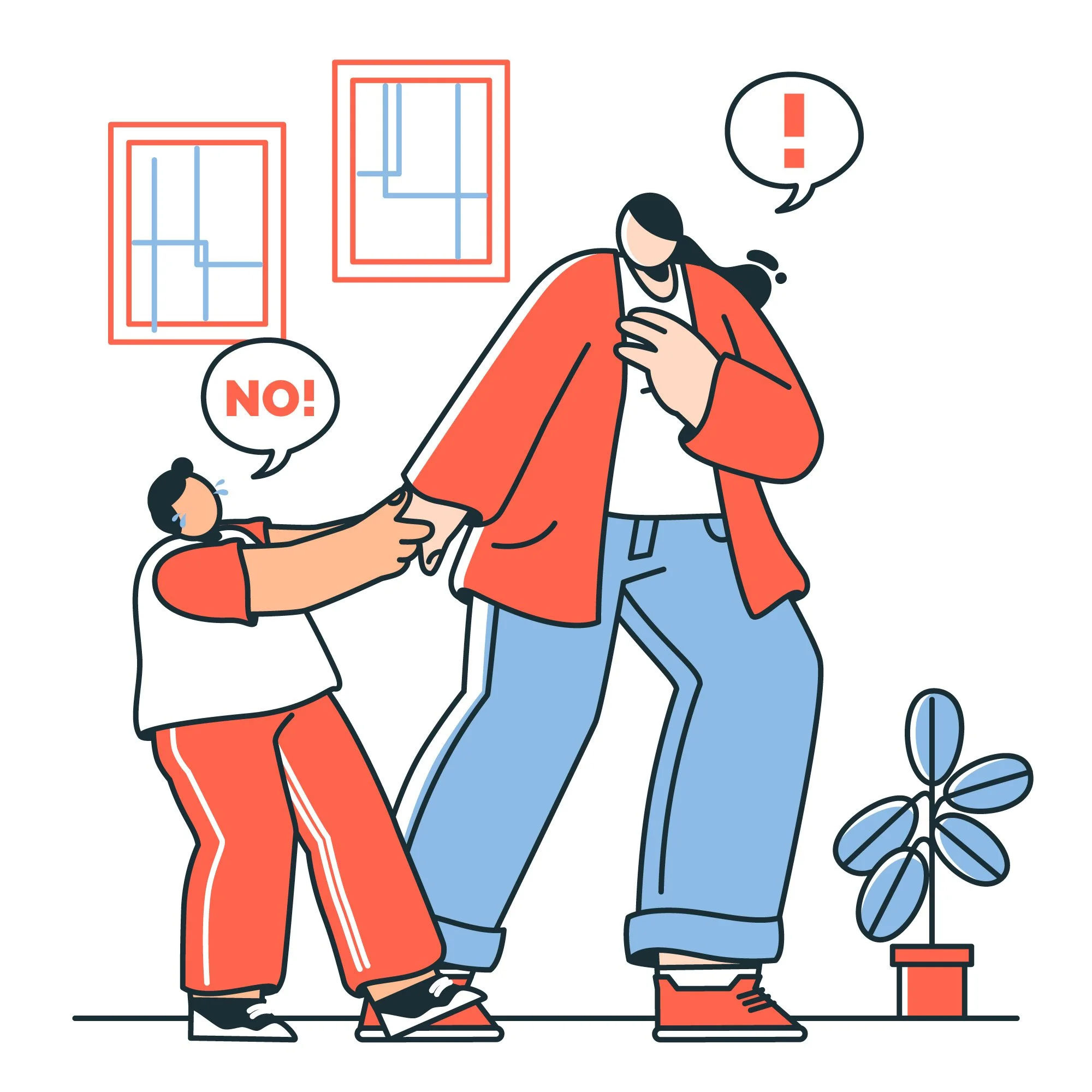
It’s 8:00 p.m., and your eight-year-old hasn’t brushed their teeth yet. You’ve asked nicely. You’ve offered rewards. You’ve set a timer. You’ve explained why it matters. You’ve been patient. You’ve been firm. Forty-five minutes later, your child is in tears, you’re frustrated beyond belief, and the toothbrush hasn’t touched their mouth.
Sound familiar?
You might think your child is being defiant. You might wonder if you’re the problem. Am I not disciplining effectively? Have I somehow failed to teach basic responsibility? You might even feel like the worst parent ever.
But what if the answer isn’t about defiance at all?
What if your child literally cannot do what you’re asking? What if it’s not because they don’t want to, but because their nervous system perceives the demand itself as a threat?
This is PDA. And it can really change the way you look at your child’s behavior.
What is PDA?
Pathological Demand Avoidance (PDA) is a proposed anxiety-driven profile often associated with autism and some forms of neurodivergence. It is characterized by an intense need to resist or avoid everyday demands, often linked to a strong need for autonomy, control, or reduced overwhelm.
This is not the same as laziness, defiance, or willful disobedience. PDA is neurological. When a person with a PDA profile perceives something as a demand (whether it’s brushing teeth, going to school, or starting homework) their nervous system responds as if there’s an immediate threat. The anxiety is real. The avoidance is automatic.
The key insight that changes everything: Can’t, not won’t.
Your child isn’t giving you a hard time. They’re having a hard time.
How is PDA different from ODD (Oppositional Defiant Disorder)?
This distinction matters deeply. Unfortunately, it’s one that many parents, educators, and even clinicians misunderstand.
Oppositional Defiant Disorder (ODD) is a pattern of frequent irritability, argumentativeness, and defiance toward authority. It is often linked to emotional regulation and frustration tolerance difficulties, and is typically supported through consistent structure, skill-building, and predictable responses.
PDA is a proposed profile often associated with neurodivergence in which everyday demands can trigger anxiety and a strong need to resist or avoid them. The response is driven by perceived pressure or loss of autonomy, and approaches that reduce demand, increase collaboration, and preserve a sense of control tend to be more effective.
When you ground a child with ODD, it is typically part of a broader pattern of setting limits and helping them connect behavior with consequences and expectations. When you ground a child with a PDA profile, you may unintentionally increase their sense of pressure and loss of autonomy, which can heighten anxiety and intensify avoidance.
This is why traditional behavioral approaches (reward charts, consequences, time-outs) rarely work for PDA kids. They’re treating anxiety with authority. And anxiety always wins against authority.
What does PDA look like in gifted kids?
Gifted children with a PDA profile present a unique and often confusing picture.
The Angel at School, Disaster at Home Pattern
Your child is perfectly polite at school. Their teacher reports no behavioral concerns. They participate in class, follow directions, and complete assignments. You feel bewildered. If they can do it at school, why can’t they do it at home?
The answer: School often has less demand-intensive interactions. Teachers give fewer direct commands. There’s more structure, more predictability, more social performance incentive. At home, where your child feels safest and is with the people they trust most, their nervous system may finally relax and then begin to unravel. The avoidance explosions, the meltdowns, the refusals? They’re actually a sign that your child trusts you enough to fall apart.
The Masking and the Collapse
Gifted kids with PDA are often brilliant at masking. They hide their anxiety, their avoidance, and their nervous system dysregulation at school. Then they come home and collapse. This can look like extreme irritability, explosive anger over seemingly small things, or a complete shutdown around any request.
Creative Avoidance as a Sign of Intelligence
Your child hasn’t taken out the trash, but they’ve built an elaborate system to remind themselves tomorrow. They haven’t started homework, but they’ve spent hours planning a fictional city. The task is being avoided, but their attention is being redirected into something that feels more engaging or manageable in the moment.
This isn’t necessarily procrastination or laziness. In some cases, it can reflect anxiety, overwhelm, or difficulty initiating tasks, alongside a strong capacity for imagination and problem-solving.
Unexplained Refusals and Shutdowns
A gifted child with PDA might refuse to do something they normally enjoy or refuse to do something they desperately want to do. From the outside, this makes no sense. You’re offering to take them to the park, and they’re refusing and crying. Why?
Because the way you asked felt like a demand. Or because the transition feels unpredictable. Or because they need to feel like they chose it. The anxiety of lost control overrides the desire for the activity itself.
Why don’t traditional strategies work for PDA kids?
Reward charts. Consequences. Positive reinforcement. Firm boundaries. Time-outs. Grounding.
These approaches are designed for children who can be motivated by incentives or deterred by consequences. But when you’re working with PDA, you’re not dealing with a motivational issue. You’re dealing with an anxiety and control issue.
Here’s what happens when you use traditional behavioral strategies with a PDA child:
The reward chart becomes a demand. “If you complete these tasks, you earn points.” Your child now perceives the task itself and the chart system as threats to their autonomy. The anxiety escalates.
The consequence becomes an additional threat. “You didn’t do your homework, so you’re grounded.” Now your child is managing not just the anxiety of the original demand, but the anxiety of the consequence, plus the added demand of the punishment. Their nervous system is now in overdrive.
Firm boundaries create a power struggle. The moment you dig in, your child’s nervous system perceives it as a threat to control. They fight harder. You fight harder. Everyone loses.
Punishment-based approaches, reward systems, and demands for compliance are exactly what doesn’t work. Yet these are the tools we’re typically taught to use as parents and educators.
What strategies actually work?
The shift from “can’t, not won’t” leads directly to strategies that can work.
Reduce Perceived Demands
Look at your daily life and identify unnecessary demands. Does your child really need a specific morning routine, or could they have flexibility in the order? Do they need to be told to do homework at an exact time, or could you set up a space where homework happens but they initiate it after another predictable activity? Does “Go to bed” have to be a demand, or could bedtime be their choice within a window you set?
Every demand you eliminate is one less thing triggering their nervous system.
Offer Genuine Choice
“Would you like to brush your teeth now or in 10 minutes?” That’s choice.
“Do you want to use the blue toothbrush upstairs or the green one downstairs?” That’s choice.
“I notice we haven’t brushed teeth yet today. What’s getting in the way?” That’s curiosity, not demand.
When your child has genuine control and choice, their nervous system relaxes. The avoidance drops dramatically.
Use Indirect Language
Indirect or low-demand language reduces the feeling of command and shifts interaction toward collaboration, autonomy, and co-regulation.
Instead of: “Do your homework.”
Try: “I’ll be in the living room if you need help with homework.”
Instead of: “Go get ready for bed.”
Try: “Bedtime is at 8:30. What do you need to feel ready?”
Instead of: “Stop yelling.”
Try: “I notice you’re really frustrated. What would help right now?”
Build Trust Through Predictability
Major stress sources for neurodivergent people are uncertainty, unexpected events, and lack of control. Reduce these where possible.
Use schedules (visual or written). Give advance notice of transitions. Follow through on what you say. Respect your child’s “no.” When you say something will happen, make it happen. When you say you’ll do something, do it.
Trust isn’t built through punishment. It’s built through consistency, respect, and kept promises.
Follow Your Child’s Lead
Your child’s interests, strengths, and preferences aren’t obstacles to work around. They’re the key to engaging their nervous system in a way that feels safe.
If your child loves dinosaurs, weave dinosaurs into learning. If they’re interested in video game design, explore that. If they want to spend an entire Saturday building an elaborate fort, let them.
When learning and activities come from your child’s interests and choices, avoidance drops. Engagement rises.
Embrace “Challenge by Choice”
There’s a philosophy that shifts everything: students choose what challenges they take on, at what pace, and in what way. No one is forced to participate in ways that trigger their nervous system. This is inherently PDA-friendly.
For example, in an environment that understands PDA, your child doesn’t have to raise their hand in class if it feels scary, but they can contribute via chat, or write their thoughts down, or share with a small discussion group. They choose the way that works for their nervous system.
This isn’t permissiveness. It’s meeting a child where they are and inviting them to grow from a place of safety and choice.
”The opposite of anxiety isn’t calm. It’s trust.”
Dr. Barry Prizant, a leading expert on neurodiversity and anxiety, shared this insight during a talk at Young Scholars Academy, and it reframes something many families recognize but rarely name so clearly: that anxiety is often rooted in a lack of trust rather than a lack of calm. What stands out in his work is the idea that children regulate best when they can trust people, environments, routines, and even their own bodies. For neurodivergent and twice-exceptional learners especially, this shifts the focus away from trying to control behavior and toward building conditions where predictability, safety, and autonomy make regulation possible.
Michael John Carley, an autism advocate, author, and consultant on neurodiversity and adult autism support, says it succinctly: “The opposite of anxiety isn’t calm, it’s trust.”
This is profound. You cannot anxiety your child out of anxiety. You cannot force calm. You cannot demand relaxation.
But you can build trust.
Trust that their nervous system is safe. Trust that their “no” will be respected. Trust that they have control. Trust that you see them clearly and love them anyway. Trust that you’re not going to push them past their window of tolerance.
When a child trusts, their nervous system settles. When their nervous system settles, avoidance decreases. When avoidance decreases, actual learning and growth can happen.
What PDA-friendly education looks like
Traditional school is, in many ways, not the ideal environment for a child with a PDA profile.
Rigid schedules. Mandatory participation. Constant demands and transitions. Lack of control. Unpredictable social situations. The demand to be seen and participate. Homework demands at home.
Is it any wonder so many autonomously driven people struggle in traditional settings?
PDA-friendly education looks different:
- Interest-driven curriculum. Students choose what they learn, guided by mentors who help them explore deeper.
- No forced participation. If a child doesn’t want to speak in a group, they don’t have to. They can contribute differently.
- Cameras always optional. Your child attends class, but whether their face is on camera is their choice.
- Small groups. Fewer students means fewer unpredictable social demands and more space for each child’s nervous system.
- Neurodivergent mentors. Adults who understand what it is like, who don’t pathologize difference, and who simply get it.
- No required homework. Learning happens during class. What happens after is your child’s choice.
- Flexibility. If your child needs a day off, they take it. If they need to reschedule, they can. Predictability and control.
- Strength-based. Every interaction builds on what your child can do and loves to do, not what they struggle with.
In this environment, children with a PDA profile often succeed. The avoidance drops. The engagement rises. Learning happens naturally.
Practical steps for parents right now
You don’t have to overhaul your entire life tomorrow. Start small.
- Shift Your Mindset: Can’t, Not Won’t
Every time you find yourself thinking, “They’re just being difficult,” pause. Replace it with: “Their nervous system perceives this as a threat. They literally cannot comply right now.”
This one shift changes your entire approach.
- Eliminate One Unnecessary Demand
Look at your daily routines. Is there one demand you could remove or make optional? Morning shower order? Bedtime routine sequence? Homework location? Remove it. Notice what happens.
- Offer One Genuine Choice Today
Pick one situation where you normally give a command. Offer a real choice instead.
“Do you want breakfast before or after you get dressed?”
“Which of these two books should we read tonight?”
“I need your help with groceries. Do you want to choose the fruits or the vegetables?”
Notice your child’s response when they have control.
- Use Indirect Language in One Interaction
Instead of directly demanding something, try indirect language:
“I notice the dishes are still on the table.”
“I’m going to start the bath. Come join me if you’d like.”
- Name the Anxiety, Not the Behavior
When your child is avoiding or refusing, name what you notice:
“I see you’re really anxious about starting that assignment. That makes sense.”
Not: “You need to stop being so difficult and just do it.”
- Ask Curious Questions Instead of Making Demands
“What’s getting in the way?” instead of “Just do it.”
“What would help?” instead of “You need to comply.”
“What do you need?” instead of “Stop being difficult.”
The bigger picture: Your child can thrive
If your child has a PDA profile, you may be familiar with how confusing and invalidating it can feel at times. Teachers may point to parenting approaches, family members may question consistency, and online advice often emphasizes consequences and stricter boundaries, even when those strategies seem to increase stress and escalation.
You probably feel exhausted, confused, and blamed for something you didn’t create and can’t force away.
When you understand PDA and shift your approach, a lot can change.
The explosive meltdowns decrease. The creative avoidance becomes creative problem-solving. The child who seemed impossible to parent becomes a child whose needs you finally understand. The defiance reveals itself as anxiety, and anxiety can be met with compassion, choice, and trust.
Your clever, quirky, anxious child can thrive. They just need an environment that respects their nervous system, honors their need for control, and builds trust instead of demanding compliance.
About Young Scholars Academy
Young Scholars Academy is a WASC-accredited virtual learning community offering 200+ live online courses and camps for gifted or 2e children ages 5–18, in classes of 6–8 students, led by neurodivergent mentors. Young Scholars Academy currently serves 1,200+ families across 47+ states and 17 countries, with a 93% semester-over-semester re-enrollment rate. ESA funding is accepted in 10+ states.
Explore Fall CoursesYou don't have to figure this out alone.
Right now, a kid who thinks like your kid is in a class they chose, with a mentor who was once just like them, surrounded by friends who don't think they're weird... they think they're interesting.
200+ courses for kids who think differently.
Live online. Classes of 6–8. Mentors who were these kids. WASC accredited.
Explore Fall CoursesTrusted by families like yours
1,200+ families across 47+ states. 93% re-enroll.
They found their people here. So can your child.
Explore Fall CoursesRecommended for readers of PDA
Find a pda class that fits your child.
Small groups of 6–8, led by mentors who get how your kid thinks.
Explore Fall Courses5 Signs Your Gifted or 2e Child Is Being Under-Served
A free, practical guide — plus early invites to expert talks, AMAs, and new course launches.
No spam. Unsubscribe anytime.
You're in! Check your inbox for the guide. ✨
You're already in the village
Here's what's open right now.
Live online. Classes of 6–8. Mentors who were these kids. WASC accredited.
Explore Fall Courses